PG Diploma in Professional Photography & Videography
The communication landscape has undergone a profound transformation – a surge in visual content, both photography and videography. In this evolving reality, there is a growing need for talent proficient in both photography and video and capable of creating exceptional communication pieces. Recognising this demand, Light & Life Academy has crafted a course aligned with current industry expectations.
Graduates of this course will go beyond creating high-end professional images and will be capable of conceptualising and creating an entire gamut of visual assets for different mediums, from still images for various platforms to videos for social media.
This course is meticulously structured and is designed to optimise time and resources with a faster turnaround. It is totally immersive. The schedule is densely packed. It is assumed that the student will be very passionate, highly motivated and totally committed to getting the best out of this course.


Benefits
Study under an industry-experienced faculty
Get mentored by Iqbal Mohamed
Access state-of-the-art facilities
Guidance with building a professional portfolio
Course Content
Duration:1 Year
The course has four parts :
1) Professional Photography
2) Extending the field of Vision
3) Video Production
4) Portfolio
Part 1: Professional Photography
Section A
Professional Photography Part 1
In-depth study of the fundamentals involved in creating an image.
- Understanding the Camera: Technical and creative possibilities.
- Aesthetics of Photography: Study of colour, design and composition
- History of Photography
- Natural Light: In-depth study of natural light and its qualities.
- Moonlight & Astrophotography
- Filters: Use of filters & their applications
- Post Production Part 1: Essentials of processing RAW files and image editing
Every area of study will be covered through lectures, slideshows, and demos (Wherever required), followed by time-bound assignments with critique (Individual/Group) and grading.
Section B
Professional Photography Part 2
Understanding artificial light sources and their applications.
- Portable Flash (Basic and Advanced): Technical and creative possibilities.
- Studio Part 1 (Introduction): Studio Lights, Light Modifying Accessories & Grip Equipment.
- Studio Part 2 (Advanced): Lighting concepts in still life, product and people photography.
- Studio Part 3 (Conceptual Photography): Conceptualising and executing images, keeping the brand/narrative in mind.
- Post Production Part 2: Image editing, compositing and basics of retouching.
Every topic (above) will be covered through lectures, visual presentations, and demos, followed by time-bound assignments with critique and grading.
- Medium format cameras: Possibilities offered by medium format cameras through hands-on experience.
- Tilt-Shift lenses: A workshop.
- Aerial & Drone Photography: A workshop
Section C
Nature Photography
The observation and appreciation of nature is an essential part of the ethos of Light & Life Academy. The belief is that every single image made is knowingly or unknowingly inspired by nature.
Cultivating the habit of observing nature in terms of shape, form, colour, texture and very critically, light - is therefore a very important component of the course.
The lectures will cover landscapes & seascapes, nature close-ups and macro photography. There will be time-bound assignments with critique and grading.

Section D
Specialisation
Once students become proficient in handling assignments in Sections A, B & C, they can pursue further study in any one of the following Groups of specialisation, building on all the concepts learnt.
Group A:
- Architecture and Interior Photography
- Food and Beverage Photography
Group B:
- Advanced Studio and Location Portraiture Photography
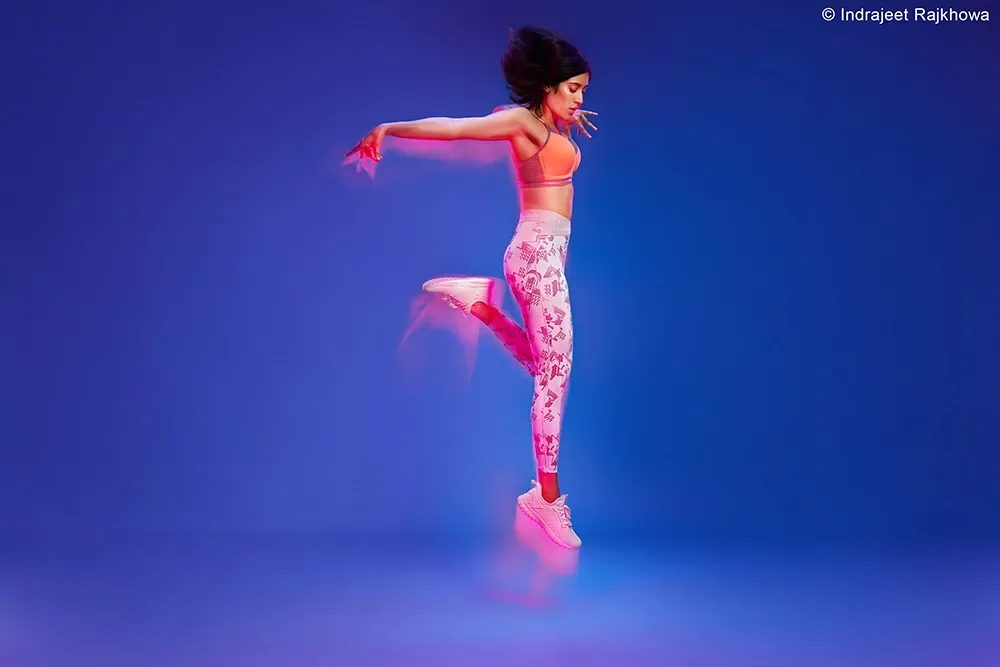
- Fashion Photography (Studio and Location)
Every area of study will be covered through lectures, slide shows, demos and informal corridor conversations with the faculty. Every subject has its time-bound assignments and submissions with critique and grading.
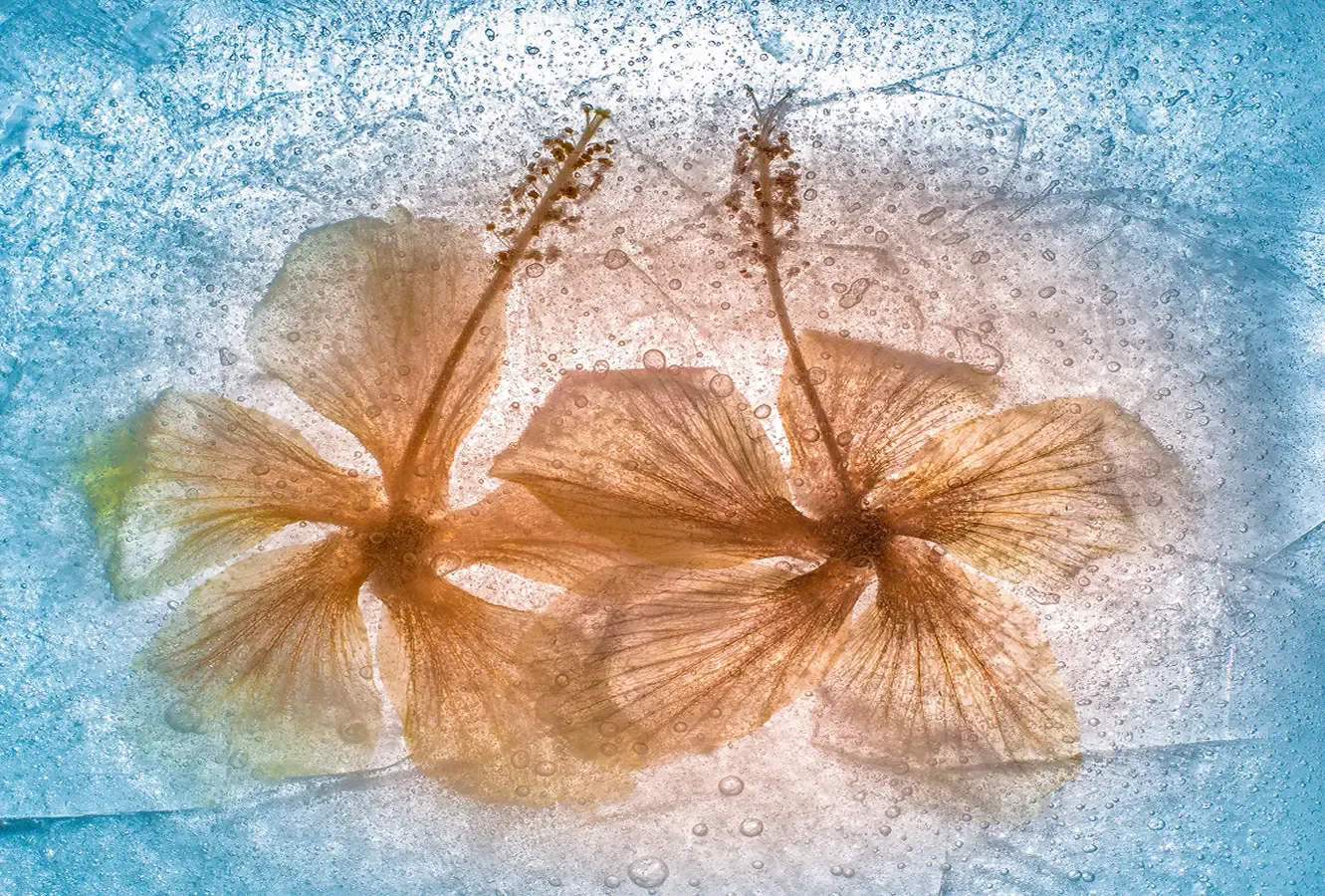
Section E
Fine Art Photography
The foremost objective of practising any visual art form is to fulfil the desire for creative self-expression. This module is designed to realise that objective.
Builds on earlier modules to help students understand the process of creating a fine art image.
Covers key photographic methods and techniques for producing work suitable for exhibition or sale.
Includes detailed study of Digital Black and White Photography, with a focus on creative post-production.
Section F
Workshops/Seminars (Compulsory)
- Travel Photography
- Photojournalism & Documentary Photography
- Wedding & Event Photography
- Business Aspects of Photography
- Exploring AI in Photography
Additional Workshops (Optional)
Workshops in Automobile Photography, Underwater Photography and Wildlife will be offered subject to a minimum number of students opting for the workshops. These workshops are offered at an extra cost.
Part 2: Extending the field of vision
Overview
Extending the field of vision
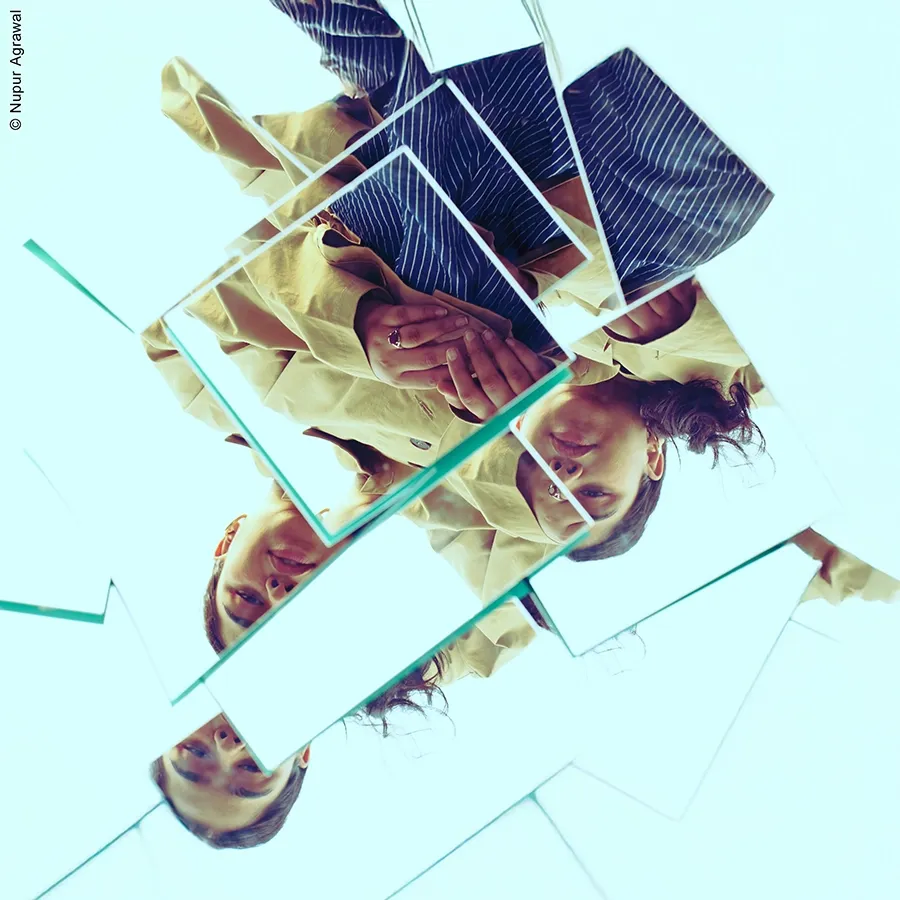
This section will focus on creativity and cover, design, story, brand—and the unknown AI. It encourages students to move beyond the technical act of image-making and engage with the ideas that give visuals meaning and purpose. These modules will make students think like communicators.

Section A
Visual Communication Basics & Advanced
Visual Communication Basics
- Principles of design
- Colour theory
- Basic Typography
Visual Communication Advanced
- The process of creative ideation
- A Picture With A Story
- Emotional Appeal in Advertising
- Visual Literacy

Section B
Branding & The Language of Visuals
Branding
- Creative Judgement
- Brand DNA
- Creative Strategy
- Copywriting (The Craft of Persuasive Writing)
The Language of Visuals
- Master the secret grammar of visual communication

Section C
AI The Invisible Apprentice
Learn how to make Artificial Intelligence work for you- not replace you.
Every topic will be covered in workshop format through lectures, discussions, practical assignments and critique.
Part 3: Video Production
Overview
Video Production
This part builds on the fundamental concepts of creating a visual (Light, colour and design) covered in the Professional Photography segment and gives an immersive learning experience on applying these to the moving image. Plus all that it takes to create a complete piece of communication in video.
Section A
Foundations of Video Production
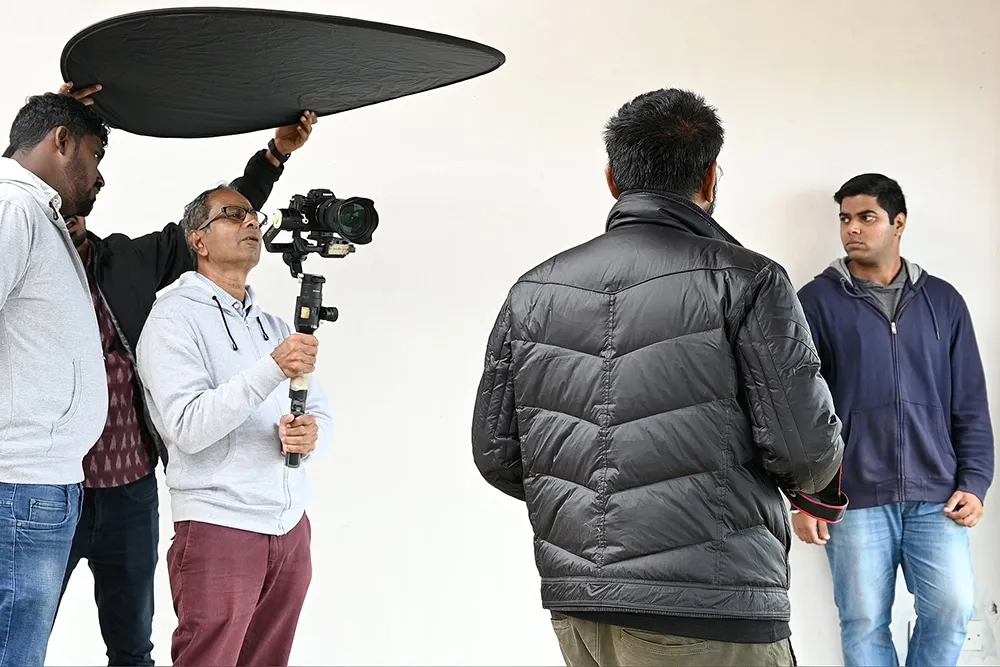
- A solid grounding in technical and creative principles for shooting video.
- Camera Fundamentals & Lenses for Video
- Camera Movements: Tripod, handheld, gimbals, sliders.
- Composition for Moving Images: Framing, depth, and dynamic balance.
- Lighting for Video (Intro): Natural light and basic artificial lighting setups.
- Low-Light Cinematography: Techniques and camera settings.
- Slow Motion & Time-lapse
Every topic will be covered through lectures, demos, and time-bound assignments with critique and grading.
Section B
Editing Fundamentals & Post-Production
- Editing Software: Adobe Premiere Pro / DaVinci Resolve. Project setup & organisation, media management, basic editing tools & workflow, transitions & effects.
- Colour correction & basic grading, export settings & delivery.
- Editing Theory: Rhythm, pacing, visual flow.
- Matching shots and creating mood.
- Titles & graphics
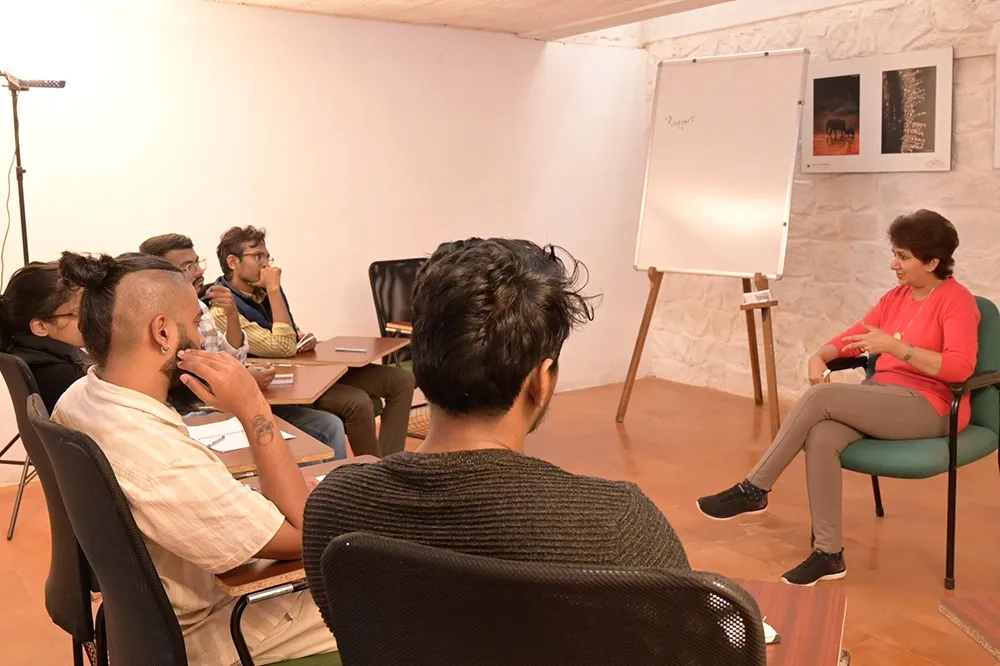
Every topic will be covered through lectures, demos, and time-bound assignments with critique and grading.
Section C
Audio for Video & Sound Design
- Recording Clean Dialogue: Lavaliers, shotguns, booms.
- Ambient & Location Sound: Capturing atmosphere for realism.
- Audio Editing Basics and Software - Adobe Premiere / Pro Tools
- Sound Mixing & Syncing for Video.
- Music Selection & Licensing: Mood, tempo, and copyright considerations.
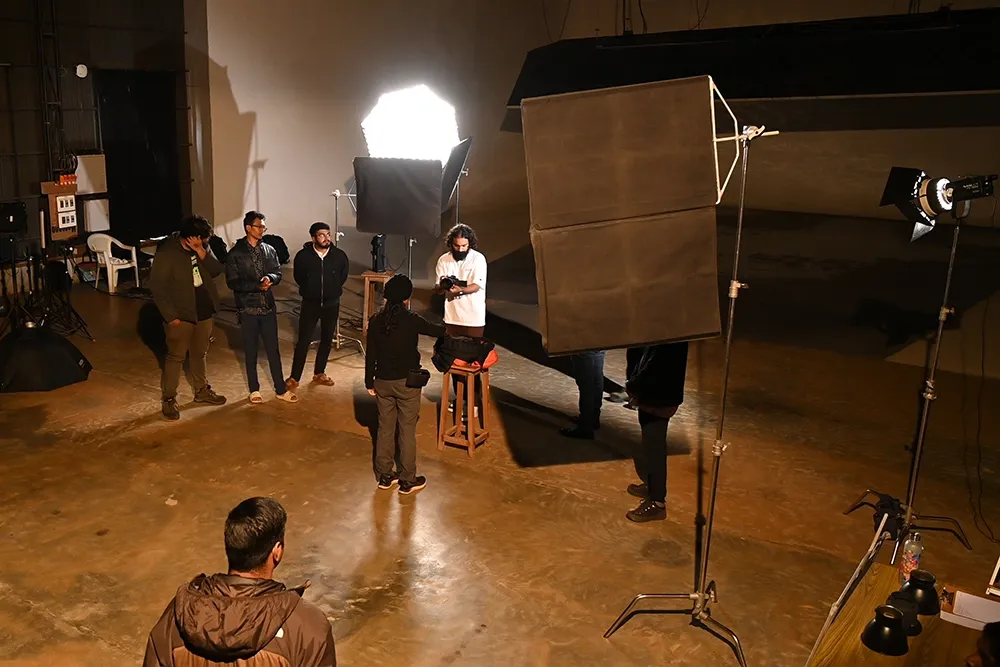
Every topic will be covered through lectures, demos, and time-bound assignments with critique and grading.
Section D
Pre-Production
- Professional planning processes that save time and elevate final output.
- Concept Development: Research, idea refinement, treatment documents.
- Scriptwriting for Video: Structure, pacing, dialogue, and voiceover writing.
- Storyboarding & Shot Lists: Visualising scenes and planning coverage.
- Mood Boards & Look Books: Defining visual tone for clients/teams.
- Location Scouting & Management: Permissions, recce reports, safety planning.
- Scheduling & Call Sheets: Organising shoots professionally.
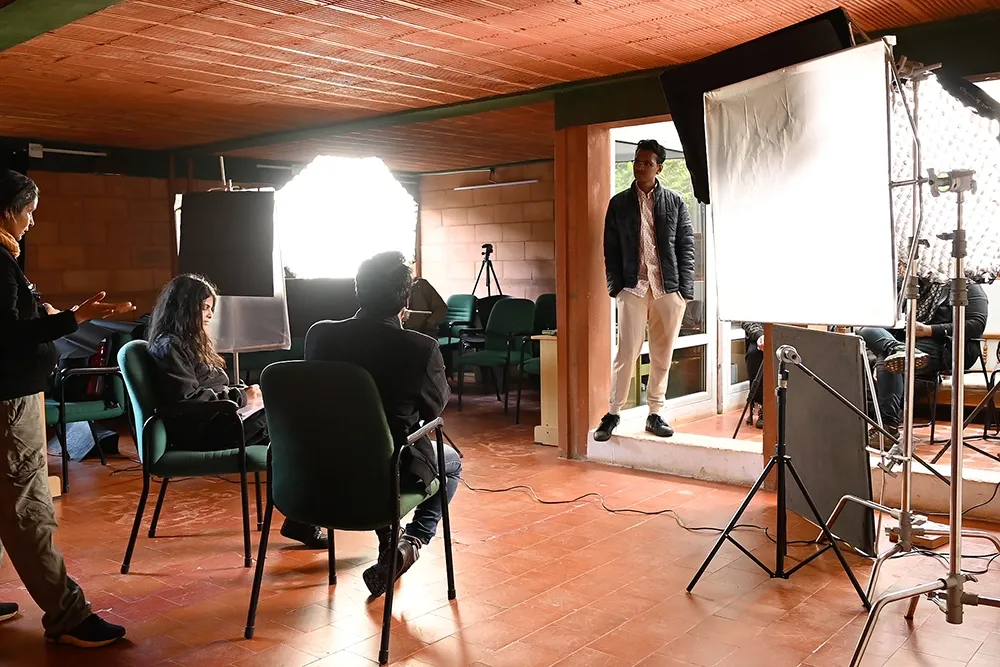
This section will be covered in workshop format, with case studies and practical assignments and feedback.
Section E
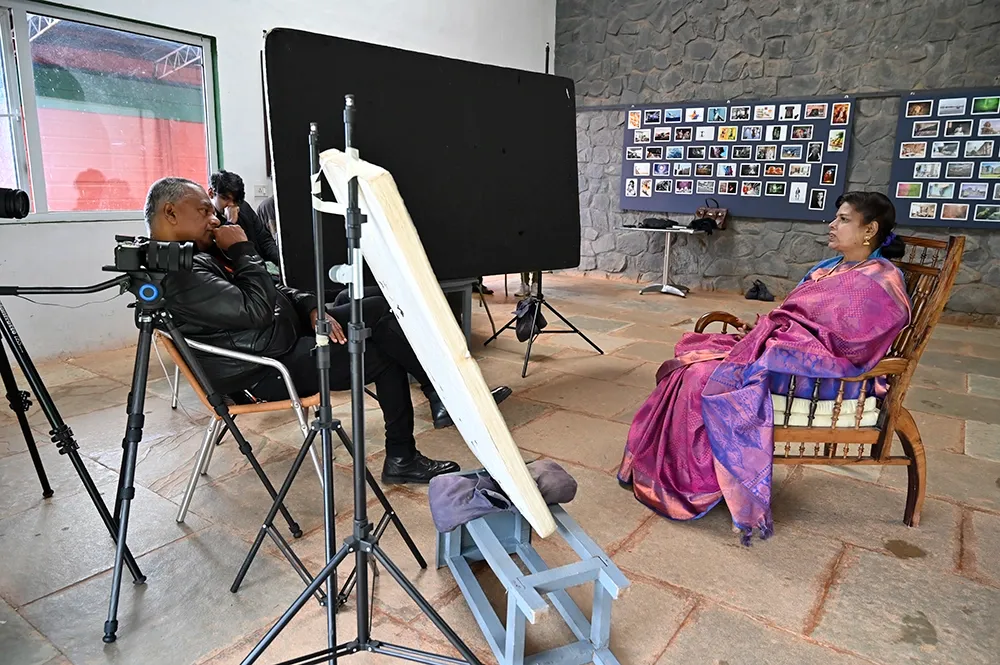
Visual Narration (Social Media, Fiction & Non Fiction) (Group Exercise)
- Shooting small scenes to exercise the grammar of Filmmaking ( Scripting , Shooting & Editing )
- Shooting an interview to exercise the knowledge of : Scripting, Shooting, Recording Audio, Shooting A Roll, B Roll & Editing
- Creating short form content for Social Media
This section will be covered through lectures, demos, and time-bound assignments with critique and grading.
Section F
Multi-Platform Content Strategy
- Repurposing and adapting content for maximum reach.
- Shooting for multiple aspect ratios (16:9, 9:16, 1:1).
- Editing for varied lengths (6s, 15s, 30s, 60s, long-form).
- Narrative compression: telling a full story in seconds.
- Platform-specific optimisation: YouTube, Instagram, LinkedIn.
This section will be covered in workshop format, with case studies, practical assignments and feedback.
Section G
Industry Simulation & Client Workflows (New Addition)
- Working on Simulated Agency Briefs with real deadlines.
- Pitch Decks for Video Projects: Selling your concept.
- Receiving & Implementing Client Feedback
- Budgeting & Resource Management
This section will be covered in workshop format, with case studies, practical assignments and feedback.
Part 4: Portfolio
Portfolio
Portfolios showcase a student's talent, exposure, and experiences, built from everything they learn during the course. Having a good portfolio to present will be the first entry point into the industry, hence it is a very important component of the course.
Students will be required to submit portfolios in both areas : Professional Photography & Video Showreel based on specialisation chosen for Photography.
A detailed brief will be given before the students start working on their portfolios.
On submission of a portfolio that meets Light & Life Academy standards, they will be eligible for the award of the Post Graduate Diploma in Professional Photography & Digital Production.
Course Information
Evaluation is done on a continuous basis, on assignments submitted and tests administered. The students are expected to clear every single assignment/test with a minimum score of 70%. Light & Life Academy believes that every student can make the grade, and the student is given enough opportunities and assistance from the faculty to achieve the minimum grade for every assignment.
Note: The policy of the Academy is to update the course content constantly. This is based on developments in the field/industry (technical, aesthetic & communication). The course content, schedules and methodology are therefore subject to change even as the course is in progress.
Student Testimonial
Testimonials
Over the last twenty-five years, LLA has become more than a photography school—it’s a space that has shaped and been shaped by everyone who’s walked through it. Here are words from those who’ve shared this journey with us—friends, mentors, industry voices, and visitors whose encounters with LLA have left a lasting impression.

The course content is comprehensive – ranging from enhancement of my observation skills, enhancing compositions, fundamentals, to advanced techniques and finally a choice from a spectrum of specializations. The course itself is packed with practical hands-on training. Coming from a world of finance to the world of fine arts, I feel that the gap could only have been bridged by Light and Life Academy.
Faiz Ahmad
Alumnus, Batch 19
We all know what we learn is important, but I’m sure from whom we learn and where we learn it is more important. The time I spent in light and life academy would be the best learning experience of my life so far, the place never misses a chance in giving you the best options in photography. If you’re looking for a place to passionately learn photography and gain a lot of experience doing so then this is it, look nowhere else.
Priyanka Rozario
Alumnus, Batch 17
The session about visual art was so interesting, especially connecting the compositions of paintings with photography. It gave a totally new perspective to observe art, whatever kind it is. How various artists with their crazy passion played an important part in the evolution of art. I never expected I would learn something related to paintings or other visual art form in a photography college! And this session was really wonderful!
Faiyaz Hawawala
Alumnus, Batch 12
How To Apply
Eligibility
Open to any graduate (minimum 15 years of formal education) above 20 years of age. Exceptions may be made for applicants with relevant work experience.
You can reach out to us in case you have any doubts or clarifications.
📞 +91 75982 87370
📧 admissions@llacademy.org
Admission Process
Admission is on a first-come, first-served basis and follows a two-step process:
1.Online Application Review by Light & Life Academy
2.Personal Interview on campus with the Director(s)
Applicants are notified of their admission status soon after the interview.
Apply Online
Step 1: Fill out the online form using the unique URL sent to your email. Upload: a recent passport-size photo, educational certificates, reference letters (optional), and a portfolio of 20 images.
Step 2: Complete online payment of the application fee — ₹1,500 + GST.
Frequently Asked Questions
Evaluation is done on a continuous basis, on assignments submitted and tests administered. The students are expected to clear every single assignment with a minimum score of 70%.
Light & Life Academy believes that every student can make the grade, and the student is given enough opportunities and assistance from the faculty to achieve the minimum grade for every assignment.